Wonderful animation on WHERE nipple needs to be for good latch.
Very informative for all breastfeeding moms!
Monday, November 24, 2008
Latch On Animation Video
Sunday, November 23, 2008
If You Give a Woman an Epidural...
If you give a Woman an Epidural...
You all know the book "When You Give a Mouse a Cookie"?

The Big, Bad Epi
Well, here we go....If you give a woman an epidural, she'll need a big bag of lactated ringers to go with it, the lactated ringers will keep her blood pressure from plummeting when she gets her epidural, but it will also swell her tissue with excess fluid so her legs and breasts will swell and she'll be shedding water weight for days if not weeks.
The fluid in her breasts will make it hard for the baby to latch on at first, so the nurses will think the baby's not able to nurse and they'll recommend some formula, just until the nursing goes better, this will probably make mom feel insecure and crappy about her mothering skills and it could interfere with bonding.
After the epidural's in, she'll probably need a catheter because she won't be moving around much anymore, and hey! she can't feel anything below her belly button anyway!
If she gets the catheter, she might get a urinary tract infection to go with it.
Once she gets the epidural and the catheter, even with the extra fluid, her blood pressure might drop anyway in response to the medication she's getting, she might get some epinephrine which has the following common side effects:Anxiety; difficulty sleeping; dizziness; fearfulness; headache; nausea; nervousness; paleness; sweating; tremors; vomiting; weakness.
If she's unlucky she might even experience these side effects:
Severe allergic reactions (rash; hives; itching; difficulty breathing; tightness in the chest; swelling of the mouth, face, lips, or tongue); fast heartbeat; irregular heartbeat; wheezing.If she gets the fluid, the epidural, the catheter, and the epinephrine, the baby might not respond very well, so the doctor will want to know what the baby's heart rate looks like all the time, and the doctor will also want to see whether mom's contractions are strong enough to dilate her cervix, so an electronic fetal scalp electrode will be screwed into the baby's head, and another special catheter, one that measures the strength of the contractions, will be pushed up inside mom's uterus.
Of course, to do this, the bag of waters would have to be broken, so that the catheter can go in. Once the bag of waters is broken, the doctor will be paying close attention to the time, because doctors don't like women to walk around with a ruptured amniotic sack for much longer than a day, even if the mom and baby need longer to birth.
When she gets her fetal scalp electrode and the intrauterine pressure catheter is in place, the contractions might not look very strong on paper, so the nurse or doctor will do some cervical exams, to see how things are going.
Lots of people, from the nurse, to the doctor, to the resident, to the medical student might put their fingers up inside of mom's vagina, so they can get a better idea of what's going on.
But it's no big deal how many people put their hands up there, because remember, mom can't feel it!
If they put their fingers up there over and over again, mom might get sick.
She might get a fever, she might even get a fever in response to the epidural!
But the doctors won't know exactly what's causing it, so they'll just give her a full spectrum anti-biotic to cover everything.
And if they give her a bunch of anti-biotics over the course of labor, she might get a yeast infection to go with it!
If she gets a yeast infection she might give the infection to her baby too, then the baby would have thrush, which could cause more breastfeeding problems.
Once she's got the fluid, epidural, iupc, fse, the catheter, the cervical exams, and the anti-biotics, her contractions might poop out altogether, so she'll get some pitocin.
The pitocin will blast her body into labor, making her contract harder and harder, faster and faster, but it won't cross the blood-brain barrier like natural oxytocin does, which is what triggers our bodies to create nature's pain killers: endorphins, so the contractions will be excruciating and very difficult to work with.
And if the contractions are very difficult to work with....chances are....
.She'll want an epidural!
Thanks to Red Pomegrante for this post... it rocks!
Wednesday, November 19, 2008
If you Want to Breastfeed Your Baby...

To make breastfeeding successful,
inform yourself with the how-to's
& surround yourself with supporters of breastfeeding.
Talk to ones who were successful at it.
It is a bond like no other you will ever
experience in your life.
"I make milk. What's your superpower?" T-Shirt
Here are some resources for mom's who are breastfeeding or would like to breastfeed.
La Leche Leauge Meetings held in Waynesboro
kellymom.com
breastfeeding online.
Monday, November 17, 2008
Doulas are for DADS, too!
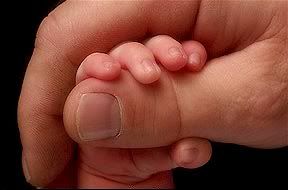
Doulas are for Dads, too!
As a doula, part of the work that I do is fostering the relationship that the couple has.
Part of the beauty of this work is that we can really help the dads to have a better birth experience too and also give them the opportunity to support his partner is his own way, whether that be right in there in the thick of it all, or in a more back of the scenes way.
The moms don't have to get upset at their partners when he just doesn't seem to know what to do because we are there guiding him while we serve both of them.
I don't think the dads are giving over their role at all. I do find, however, that at some point during labor even the most actively supportive dads step back just a bit into a more protective role and allow the "women's work of birth" to take over. Most of the time when this happens it is as labor becomes very active, just before full dilation when it can get very intense. They always come right back to it when she is pushing.
As a doula, part of the work that I do is fostering the relationship that the couple has.
Part of the beauty of this work is that we can really help the dads to have a better birth experience too and also give them the opportunity to support his partner is his own way, whether that be right in there in the thick of it all, or in a more back of the scenes way.
The moms don't have to get upset at their partners when he just doesn't seem to know what to do because we are there guiding him while we serve both of them.
I don't think the dads are giving over their role at all. I do find, however, that at some point during labor even the most actively supportive dads step back just a bit into a more protective role and allow the "women's work of birth" to take over. Most of the time when this happens it is as labor becomes very active, just before full dilation when it can get very intense. They always come right back to it when she is pushing.
There was some study done, maybe by Klaus and Kennell showing that moms who have doulas and their spouses with them feel closer to their spouses after the birth than those who don't have doulas.
A good doula makes the dad look like a hero!
A good doula makes the dad look like a hero!
Saturday, November 15, 2008
3D Medical Animation of Normal Vaginal Birth (Childbirth)
This is what NORMAL BIRTH looks like... but of course this LOOKS much easier than it will actually present!!
Thursday, November 13, 2008
Dog Birth at Our Home!


I have news from our home!
We have a litter of puppies... I got to witness this amazing process, too! (that is why I am posting it on this blog, as I have done on my personal blog, too) I know it is not human birth, but it is a similar concept, huh?! :)
Our dog, Sadie, was acting funny on Wednesday, early in the morning. She usually sleeps till 9 am or so, so when I awoke to find her pacing back & forth & nesting in the box I had made for her, I knew what was going on.
6:30 a.m.- She asked to go outside, I waited for her, because I could tell she was anxious. She did her business & then came immediately inside to her box.
She was 'circling' in the box. She started breathing heavy & licking repeatedly.
7 a.m.- She gets in the box to stay.
7:15 a.m.- Sadie is visibly pushing/grunting.
7:30 a.m.- Shaking, drooling heavily, trying to rest.
7:45 a.m.- 1st puppy born (blonde female)
8 a.m.- More contractions
8:09 a.m.- 2nd puppy born (black female)
8:17 a.m.- 3rd puppy born (brown female)
8:43 a.m.- 4th puppy born (black w/white paws male)
8:55 a.m.- 5th puppy born (black female)
Sadie ate each placenta, each sac off of the pups. I only helped remove the first sac, as she looked dumbfounded... I waited for 3 minutes to see if she would do it, then only removed it from the face of puppy, the puppy was not moving, was perfectly still for 3 minutes. When she did finally squeal, Sadie knew exactly what to do from there.


Wednesday, October 29, 2008
Breastfed Babies may end up Better Behaved

The new study reviewed more than 100,000 interviews of parents and guardians of children between the ages of 10 months and 18 years who participated in the National Survey of Children's Health.
Parents were asked about breast-feeding and about their child's behavior and mental health.
Examples of questions included:
- Are you currently concerned a lot, a little or not at all about how your child behaves?
- How he/she is learning pre-school or school skills?
- Has a doctor or health professional ever told you that your child has behavioral or conduct problems?
Parents of children who were breast-fed were 15 percent less likely to be concerned about their child's behavior, compared to formula-fed infants. And the breast-fed children were 37 percent less likely to have a medically diagnosed behavioral or conduct problem, according to the study.
Read the full article here.
Friday, October 24, 2008
Take Childbirth Education or not??!!
As a 21st century mom, it's harder than ever to find the time to prepare for childbirth.
"You're busier than ever before, and have less and less time to go hunting through pregnancy book after pregnancy book, just "hoping" you're prepared. And, when you're living in such a fast-paced world day in and day out, juggling schedules, researching your options, and setting aside the time to attend live childbirth classes is virtually impossible."
"Skimping on your natural child birth education is the sure-fire way to end up with the long, complicated birth experience you desperately want to avoid."
"For less than the price of a nice dinner out - just $48.95 - you can learn to be fully mentally, emotionally and physically prepared to meet your child, free of any fears or anxiety about giving birth.I really want to encourage you to make natural child birth education a priority in your life. You"ll have absolutely nothing to lose, except your worries and fears about giving birth!"

I am not affiliated with this site at all....but fully agree with what her point is...."You're busier than ever before, and have less and less time to go hunting through pregnancy book after pregnancy book, just "hoping" you're prepared. And, when you're living in such a fast-paced world day in and day out, juggling schedules, researching your options, and setting aside the time to attend live childbirth classes is virtually impossible."
"Skimping on your natural child birth education is the sure-fire way to end up with the long, complicated birth experience you desperately want to avoid."
"For less than the price of a nice dinner out - just $48.95 - you can learn to be fully mentally, emotionally and physically prepared to meet your child, free of any fears or anxiety about giving birth.I really want to encourage you to make natural child birth education a priority in your life. You"ll have absolutely nothing to lose, except your worries and fears about giving birth!"

Knowledge is power. That cannot be more true in this world of birth, that is upcoming for you & your family!
Wednesday, October 15, 2008
Epidurals & Tattoos have a Connection??!!
 What in the world could tattoos have in common with epidurals?
More than you might think.
The future may be one of the last things on the mind of those desiring a stylish look with a tattoo, but most likely they aren't aware of some of the other lesser-known problems that might occur with the permanent injection of dyes.
But, the whole reason for the post is this part:
What about epidurals? This is another area of potential problems with tattoos. With the popularity of tattoos on women's lower backs, these often large and ornate tattoos cover the specific sites where epidural needles are usually inserted. The most common reason for an epidural is for pain control during childbirth, but they also are used sometimes during certain surgical procedures when general anesthesia is not advised.
Back in 2002, a couple of anesthesiologists from Vancouver, Canada, wrote about a small study they did with three patients in labor who had lumbar tattoos. The doctors wondered if this was a potentially problematic situation because theoretically the epidural needle could pull down and deposit the ink near the spinal cord. Even though the study was small and they did not have problems with these particular patients because they inserted the needle where there wasn't ink, their article in the Canadian Journal of Anesthesia caused many other anesthesiologists to change their practices.
MAKES SENSE, HUH?!
Monday, October 13, 2008
Birth Circle NEXT MONDAY, the 20th!

It will be Birth Circle time again next week.
We hope you can join us for good information, advice & snacks!
It is at Kelly's home in Staunton, VA.
Email me for directions, if you need them.
It is at 7 p.m. on Monday, October the 20th.
Thursday, October 9, 2008
Kegel Exercising Benefits in Pregnancy & Beyond
 Ahh, Kegels... the exercise of perineum champions!!!
Kegel exercises can help prevent incontinence, & abdominal, pelvic, vaginal & urethral pain during pregnancy.
Doing Kegels regularly can also lessen the risk of vaginal tearing during childbirth.
Following the birth of your child, they can help strengthen your pelvic floor muscles, increase nerve activity & blood circulation in the sexual organs & preven postpartum incontinence.
*Do 6 Kegels each time you empty your bladder, while pregnant, for best results. Hold them for up to 10 seconds each.
*Do Kegels every day in either a seated or standing position during pregnancy & on into the rest of your life!!!
Reference: Holistic Pregnancy & Childbirth by James Marti w/ Heather Burton
Reference: Holistic Pregnancy & Childbirth by James Marti w/ Heather Burton
Tuesday, September 23, 2008
Doppler More Powerful than Ultrasound Exams

According to Anne Frye, midwife and author of "Understanding Lab Work in the Childbearing Year" (4th Ed.)p. 405:
Doppler Devices: Many women do not realize that doppler fetoscopes are ultrasound devices. (apparently, neither do many care providers. Time after time, women are assured by doctors and even some nurse midwives that a doppler is not an ultrasound device.) . . . .
Not well publicized for obvious reasons, doppler devices expose the fetus to more powerful ultrasound than real time (imaging) ultrasound exams. One minute of doppler exposure is equal to 35 minutes of real time ultrasound. This is an important point for women to consider when deciding between an ultrasound exam and listening with a doppler to determine viability in early pregnancy. . . . .
If you have a doppler, put it aside and make a concerted effort to learn to listen yourself! Save your doppler for those rare occasions when you cannot hear the heart rate late into pushing or to further investigate suspected fetal death. " copyright l990, Anne Frye, B.H. Holistic Midwifery.
Personally, after 23 years of attending births, I would not permit a doppler in my house if I were pregnant. You always know that something is ultrasound because there will be "jelly" involved. If you want a cheap listening device for the baby's heart just save the core from a roll of toilet paper. Put one end on the lower belly and the other on hubby's ear.
If you want to know your baby is doing well, count the fetal movements in a day. Starting at 9 a.m. count each time the baby kicks. There should be l0 distinct movements by 3 p.m. http://gentlebirth.org/archives/preScreen.html#USResources
Saturday, September 20, 2008
Difference Between Doulas and Midwives
A common misconception is that we, as doulas, can do what a midwife does. That is NOT true. Our roles seem the same, but in the midst of the laboring mother's world, the roles are different, yet both lead to raising the chances of having a normal birth.
Monday, September 8, 2008
Birth Circle next Monday!
 Come together to explore this significant time in your life.
Pregnant Women at any stage and New Moms
and anyone interested in Birth in general!
This Birth Circle will give you the opportunity to
focus on your pregnancy and transition into Motherhood.
There will be time to ask questions and to share
experiences with other Mothers and Mothers to be.
I host a Birth Circle at my home in Staunton, VA- every 3rd Monday at 7p.m. Please join us, if possible. We would love to have you!
Email me here for more info & directions: kelly@doulasurround.com
Children are welcome & we will have light refreshments!
Subscribe to:
Posts (Atom)

 Posts
Posts


.jpg)